

About
How This Approach Began
Design by Trait grew out of an MSc in Occupational & Organisational Psychology and research into job satisfaction, burnout, motivation and engagement. However, the real insight came from what we kept seeing in practice. In remote and hybrid work, focus and recovery often break down not because people lack discipline, but because there’s a mismatch between work personality, job demands, and the home environment they’re trying to perform in.
Today, we combine occupational psychology with workspace strategy to design practical zoning, routines, and environmental cues that support sustainable focus. Whether that’s for an individual working from home or a team working remotely.
Credentials & relevant experience:
-
MSc Occupational & Organisational Psychology: Academic research project on job satisfaction, burnout, motivation, engagement).
-
Organisational psychology consultancy (intern): Personality assessment, insight synthesis, research for projects.
-
Child protection services (workforce improvement): Co-designed ways of working for social workers and team leads to reduce burnout, support engagement and reinforce compassionate practice.
Trust Signals

Trust Signals
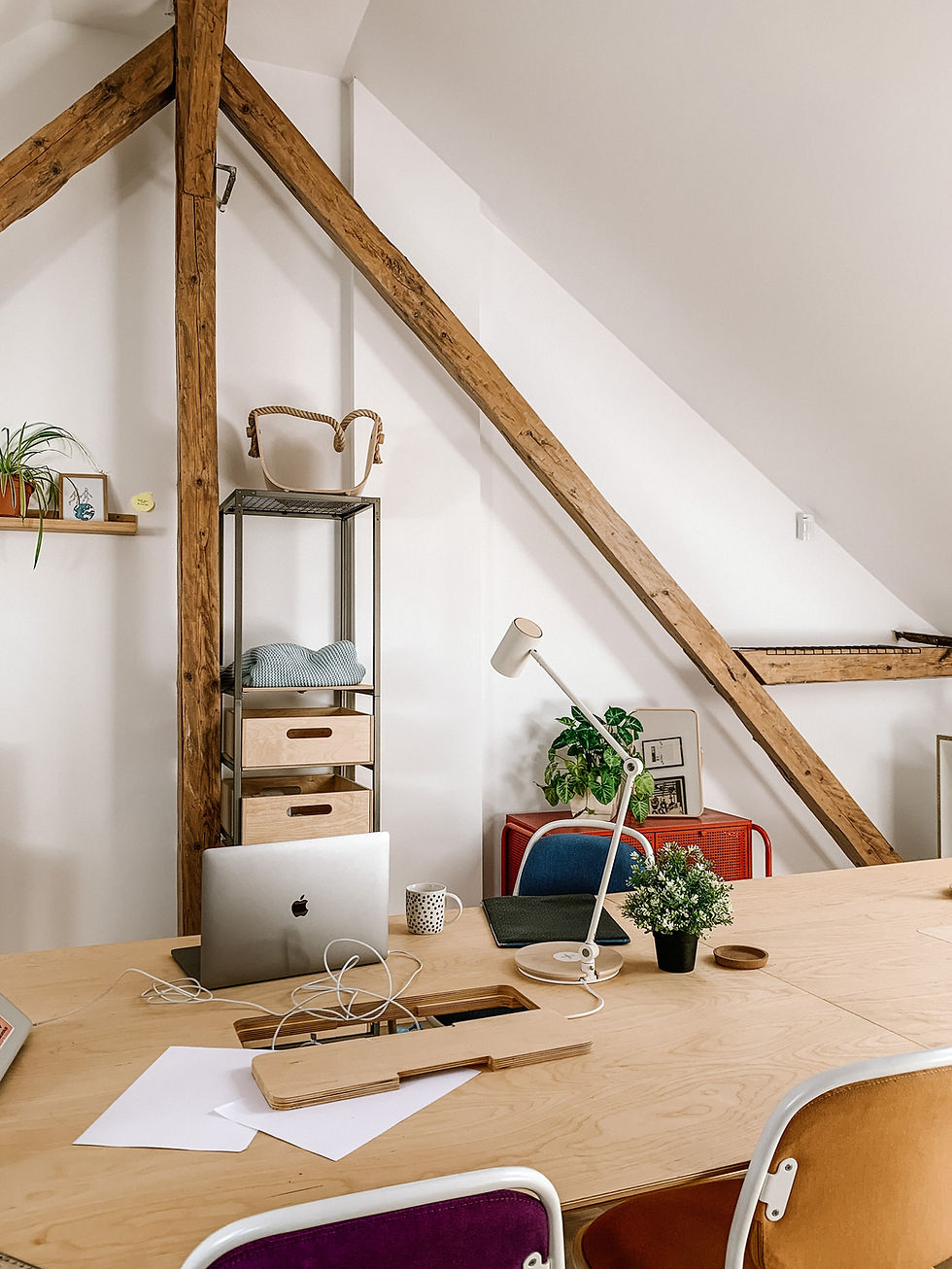
Research shows that better person–environment fit (e.g., person–job/person–organisation fit) is linked to higher job satisfaction and better work outcomes, so tailoring matters ( Kristof-Brown, 2005)
Fit improves outcomes

WHO notes telework can significantly impact workers’ health, safety and wellbeing, and offers guidance on organising telework to protect physical and mental health.
WFH is a wellbeing issue, not a convenience

Indoor environmental quality (air, temperature, light, noise) has documented links to cognition and performance. Supporting the idea that environment design can be functional, not aesthetic-only.
Environment = Performance
Why we’re unique

Work personality x job demands (two-lens method):
We combine a trait assessment with job/needs analysis (tasks, tools, constraints, collaboration load) so recommendations fit how work actually happens - not how it “should” happen.

Wellbeing-first, design-backed:
We treat the workspace as a wellbeing intervention: supporting focus, recovery and boundaries through practical environmental and behavioural supports, not décor trends.

Blend, not boxes:
Most people aren’t one type. We map your profile as a blend of Strategist, Minimalist, Collaborator and Driver tendencies, then tailor supports to your mix.

Scalable for remote teams:
The same method works for individuals and can be applied across teams with consistent, role-aware supports (and optional group delivery).
Values
Evidence-based & ethical:
We turn research into practical, low-friction changes. Grounded in occupational psychology and aligned with healthy work principles. (Source: APA work & wellbeing resources.)
Person-centred & context-aware:
We design for real lives and real constraints: rental-friendly, culturally responsive, and tailored to your space, tools, and routines.
Simplicity first:
Clear priorities, minimal cognitive load, and phased rollouts - so changes are easier to start and more likely to stick.
Why We’re Unique
Work personality x job demands (two-lens method):
We combine a trait assessment with job/needs analysis (tasks, tools, constraints, collaboration load) so recommendations fit how work actually happens - not how it “should” happen.
Wellbeing-first, design-backed:
We treat the workspace as a wellbeing intervention: supporting focus, recovery and boundaries through practical environmental and behavioural supports, not décor trends.
Blend, not boxes:
Most people aren’t one type. We map your profile as a blend of Strategist, Minimalist, Collaborator and Driver tendencies, then tailor supports to your mix.
Scalable for remote teams:
The same method works for individuals and can be applied across teams with consistent, role-aware supports (and optional group delivery).